
Understanding Wear and Tear, Cleaning and Maintenance at Check-Out

Introduction
At check-out, the condition of a property is assessed by reference to three separate considerations:
Wear and tear
Cleaning
Maintenance
These are distinct and must be assessed as such.
They are not interchangeable.
This wear and tear cleaning maintenance check-out assessment is based on direct comparison with the condition recorded at check-in.
A detailed inventory provides the framework required to assess each area accurately.
Wear and Tear Cleaning Maintenance Check-Out Assessment
Assessment is based on direct comparison with the condition recorded at check-in.
Each category is considered separately:
Wear and tear relates to deterioration over time
Cleaning relates to the standard of cleanliness
Maintenance relates to repair and upkeep
Cleaning is assessed against the standard recorded at check-in and does not fall under wear and tear.
Each area is assessed by comparison with the corresponding record in the check-in inventory. Observations are recorded within the relevant section of the report, maintaining a structured and evidence-based approach without duplication.
Accurate classification is essential to ensure a fair and evidence-based outcome.
Wear and Tear
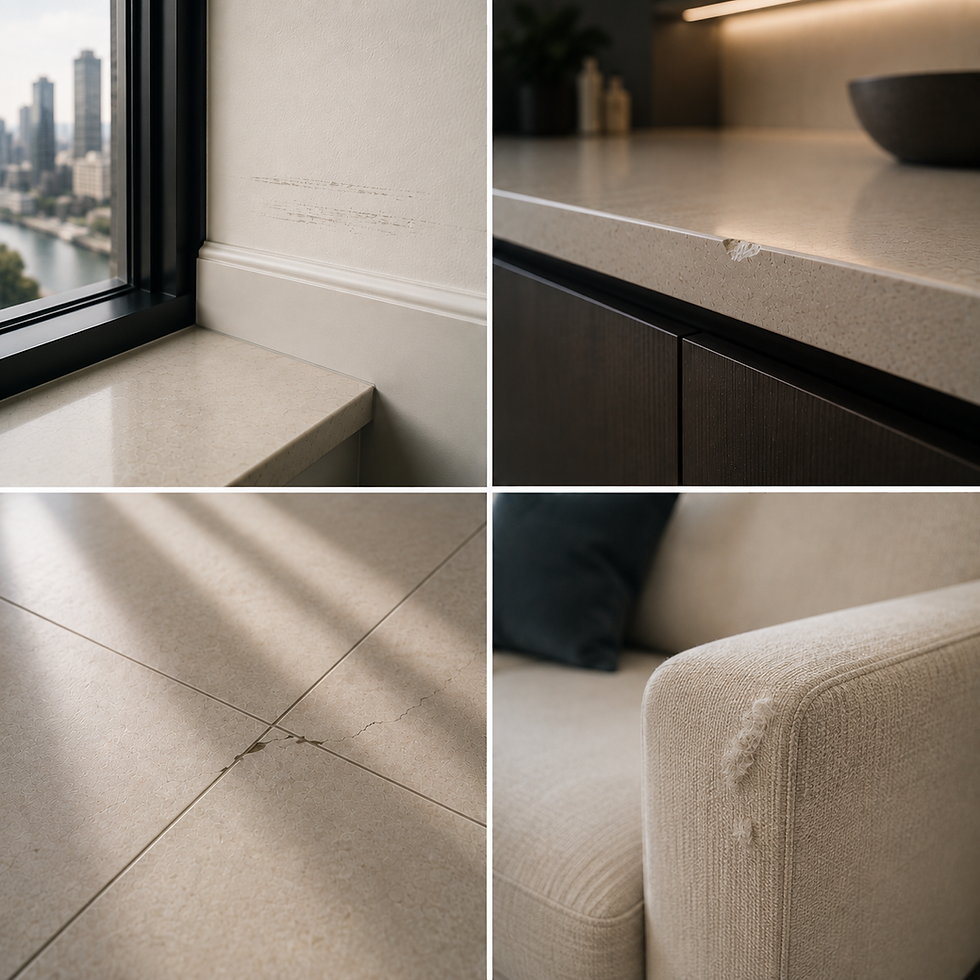
Wear and tear refers to the gradual deterioration of an item through normal use over time.
This is influenced by:
Age
Quality
Length of tenancy
Level of use
Examples may include:
Light wear to carpets in high-traffic areas
Minor scuffing to walls
Natural fading of materials or finishes
Wear and tear reflects reasonable use of the property.
It does not include lack of cleaning or damage.
Cleaning
Cleaning is assessed against the standard recorded at check-in.
This relates to the level of cleanliness at the end of the tenancy, not deterioration.
Examples include:
Grease build-up to kitchen surfaces and appliances
Limescale in bathrooms
Dust, debris, or general lack of cleaning
Where a property was professionally cleaned at check-in, it is expected to be returned to a comparable standard.
Maintenance
Maintenance relates to the ongoing repair and upkeep of the property.
This sits outside both wear and tear and cleaning.
Examples include:
Faulty appliances
Plumbing or electrical issues
Deterioration requiring repair or replacement
Maintenance is generally the responsibility of the landlord unless an issue has arisen due to misuse or neglect.
The Role of the Inventory
A professionally prepared inventory report provides:
A clear record of condition at the start of the tenancy
The standard of cleanliness against which check-out is assessed
A structured format for comparison
A consistent framework for categorising observations
This supports accurate assessment and reduces the scope for dispute.
Conclusion
Wear and tear, cleaning, and maintenance are separate considerations and must be assessed independently.
Each plays a different role in determining condition at check-out.
A detailed inventory ensures:
Clear distinction between categories
Consistent assessment
Evidence-based outcomes
Professional Inventory Services from Oakwood Inventories
Oakwood Inventories has been producing independent professional inventory reports across London, Hertfordshire and Buckinghamshire since 1994.
Over more than three decades the business has inspected a wide range of residential rental properties. That experience has reinforced one simple principle: the quality of an inventory report depends entirely on the level of detail recorded at the commencement of the tenancy.
At Oakwood Inventories the approach has always remained the same — detail, detail, detail.
Professional Standards
Oakwood Inventories is a member of the Association of Independent Inventory Clerks (AIIC) and operates within The Property Ombudsman, supporting independent and evidence-based inventory reporting in accordance with recognised industry principles.
Further Information
Landlords, letting agents and property managers requiring an independent professional inventory service are welcome to contact Oakwood Inventories for further information.
Website: https://www.oakwood-inventories.com
Email: info@oakwood-inventories.com


Comments